


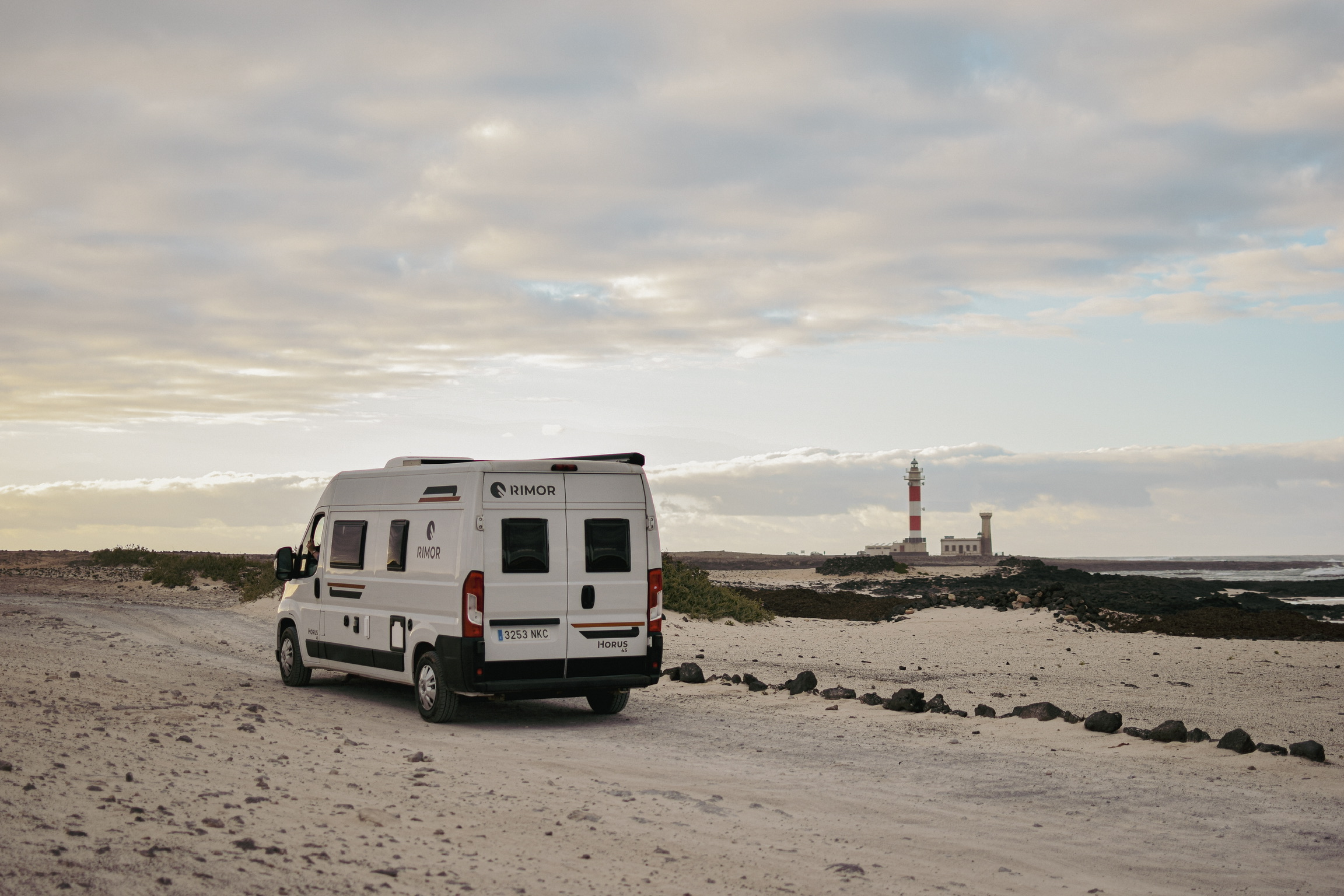
Surfing in Fuerteventura in a campervan: how to plan your trip following the waves
Surfing in Fuerteventura is truly enjoyable when you don't have to return to the same hotel every evening. With a campervan, you move with the wind and the sea. The north, between Corralejo, Majanicho, and El Cotillo, receives the biggest waves in winter. From April to August, however, the best combinations of waves and wind occur. And between sessions, your home is with you: coffee with a view, your wetsuit drying, and a siesta gazing at the Atlantic.
The essentials in five lines
- According to the Barceló surf guide, The biggest waves arrive in winter and the best combination of waves and wind is from April to August.
- To begin with, Majanicho and the long waves of El Cotillo are among the gentlest in the north. Playa del Moro, in Corralejo, is a haven for surf schools.
- In summer, the water temperature is around 22°C and the northeast trade winds blow constantly, according to the British Met Office.
- Sleeping inside the camper is overnighting. Putting out a table, chairs, or clothesline is camping.
- To drive a Vanvaz you need to be over 25 years old and have a B driving license with at least one year of experience.
Why does surfing in Fuerteventura fit so well with campervan life?
Because the sea decides, and you adapt. One day the north wind is perfect first thing in the morning. The next, the wind spoils it, and you have to find another shore. With a campervan, you're not tied to a schedule or a transfer. You check the forecast at night, choose a beach, and wake up just a few meters from the peak.
Furthermore, the island is manageable. You can cross from north to south in about two hours, so changing coasts won't take up your whole day. That's why in our 7-day campervan route through Fuerteventura We already suggested sleeping wherever you feel comfortable. With a surfboard in the trunk, that idea becomes even more useful.
When is the best time to surf in Fuerteventura?
It depends on what you're looking for. If you want big waves, winter is your season. If you prefer calmer seas with good winds for other sports, spring and summer are more favorable. August is usually the quietest month.
Winter: Big waves in the north
That's when the swells from the North Atlantic arrive. The north of the island fills up with experienced surfers, and the camper van is your refuge between sessions. While half of Europe is freezing, here the air temperature rarely drops below 16°C.
From April to August: waves and wind in balance
The waves get smaller and the trade winds take center stage. It's a great time to learn, to go to a surf school, or to combine surfing with windsurfing and kitesurfing. However, the wind changes conditions throughout the day. Get up early: the first hour is usually the best.
From October to December: patience and some waves
It's the most unpredictable time of year. There are great days and days with flat seas. Here, the campervan makes all the difference: if there are no waves on one coast, you move your campervan to the other.
Where to surf in Fuerteventura with your campervan?
Most of the well-known peaks are in the north and west. The south is windier. This is a simple way to organize it according to your skill level.
Corralejo and Moro Beach
It's a great starting point. Many schools operate here, so it's a good place for your first lessons. Right next door is the Corralejo Dunes Natural Park, with 2,668.7 hectares of sand, according to [source missing]. Spain.info. It can only be traversed on designated trails, and the FV-104 crosses it in its final kilometers.
Majanicho
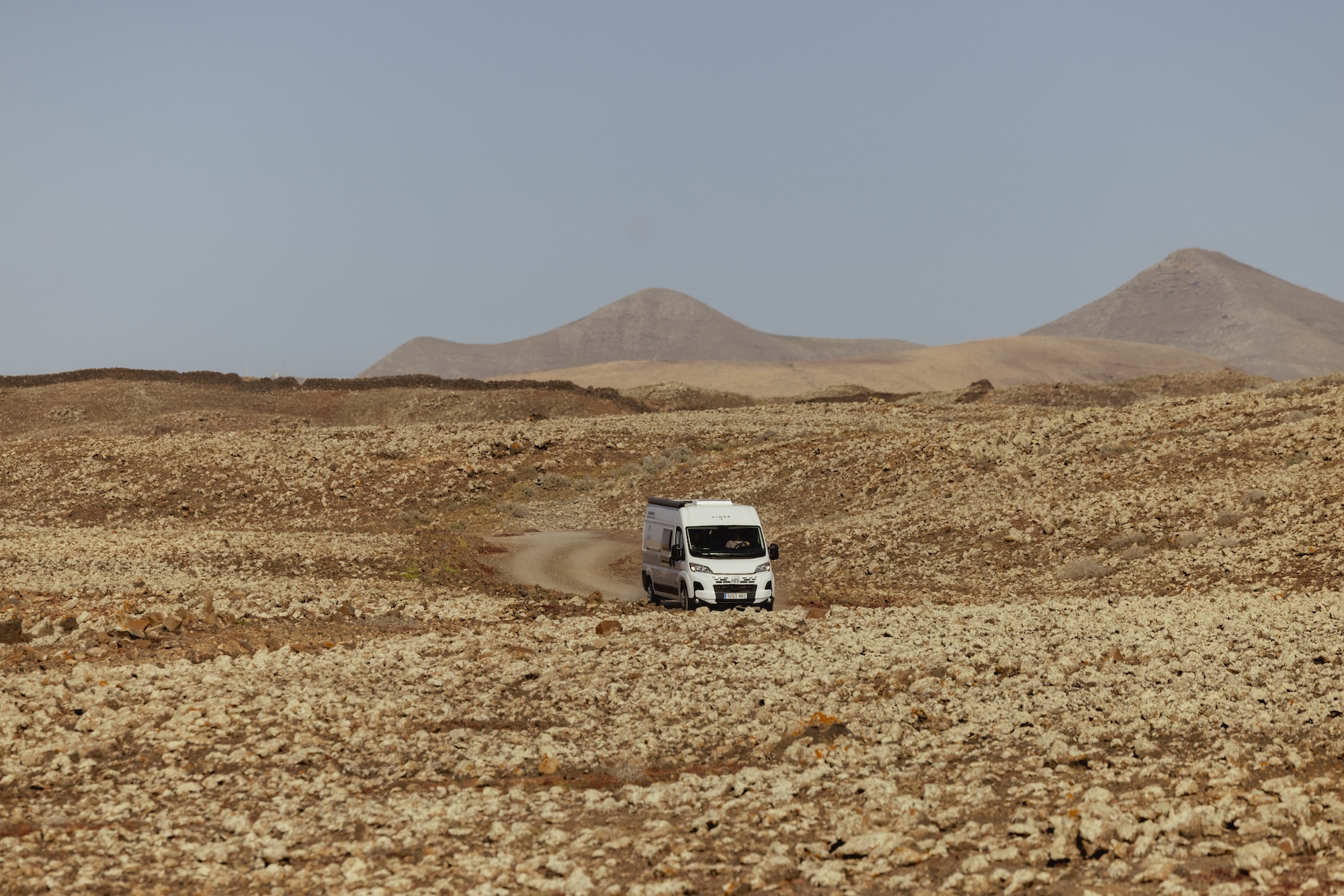
A small fishing hamlet on the north coast, between Corralejo and El Cotillo. It's considered one of the safest spots for beginners. The track leading there is unpaved: drive slowly and be mindful of the camper's height.
El Cotillo
Long waves, unforgettable sunsets, and a town with a great surfer vibe. It's perfect for a couple of days' stay. Mornings, surfing. Afternoons, a stroll around the harbor and a fish dinner.
Island of Wolves
Off the coast of Corralejo, one of the most powerful waves in the area breaks. It's only for experienced surfers. Remember that you need a license to set foot on the island. free authorization from the Cabildo, with limited capacity and visiting shifts.
The south: La Pared and Sotavento
La Pared has a surfing tradition and a wild landscape. Further south, the Sotavento beach It's a windsurfer's paradise. If you're traveling with someone who kitesurfers or windsurfs, you'll all find yourselves here.
How to organize the camper for a surf trip?
A surf trip in a camper van is all about order. The sand, the saltwater, and your wet wetsuit coexist with your bed and your kitchen. With a few basic routines, everything flows smoothly.
1. The board, well protected
It travels in a cover and securely fastened so it doesn't move around on curves. Additional accessories are shown during booking, depending on the model. If you have any questions about space, ask your [department/salesperson]. Vanstyle advisor before leaving.
2. A "wet" zone and a "dry" zone«
Reserve a bucket or a waterproof bag for your wetsuit and towels. That way, the sand won't get on the bed. Shake everything out before going in and leave your flip-flops outside the sleeping area.
3. Water, with a head
The water in the campervan is limited. Use it for a quick rinse and take advantage of the showers at beaches that have them. Refill it whenever you can. We explain this in more detail in Vanlife for beginners.
4. The neoprene dries, but without setting up camp.
It dries quickly in the sun, but if you're going to spend the night, pack everything up. Sleeping inside is considered overnight accommodation. Setting up a clothesline, table, or chairs outside is considered camping, and that's only allowed in designated areas. We explain it in more detail in [link/section/etc.]. Where can you sleep in a campervan in the Canary Islands?.
What to pack in your campervan for a surf trip to Fuerteventura?
Less luggage means more travel, even with a surfboard. The camper van already comes with a kitchen, utensils, and basic camping equipment, so your suitcase can be mostly just water and sun gear. Here's a short list that never fails:
- Board with cover and spare fins. A hit on a dirt track can break a keel.
- Neoprene and booties. On some northern beaches the seabed is volcanic rock.
- Wax, a spare leash, and a small repair kit. There isn't always a shop nearby right on the coast.
- Waterproof sunscreen, hat and sunglasses. The Fuerteventura sun is unforgiving, even in winter.
- A collapsible basin and two microfiber towels. They take up little space and dry quickly.
- Soft bags instead of hard suitcases. They are stored better and leave room for what's important.
- An extra bottle of water. To clarify the sand without using up the tank.
And here's a tip that's worth its weight in gold: prepare everything for tomorrow's session each night. Wetsuit at hand, waxed board, and coffee ready. That way, when the alarm goes off, all you have to do is open the door.
Respect the sea and those who are already in the water.
At the most popular breaks, you'll find locals surfing year-round. Say hello, wait your turn, and don't ride someone else's wave. If you're a beginner, choose surf schools and avoid the powerful northern swells on big days. And take your trash back to your camper: the island is a Biosphere Reserve and deserves to be left as we found it.
A day surf trip in a camper van, from sunrise to sunset
You wake up to the light streaming through the window. You look at the sea from your bed and you already know if there are waves. Quick coffee, wetsuit, and into the water before the wind picks up.
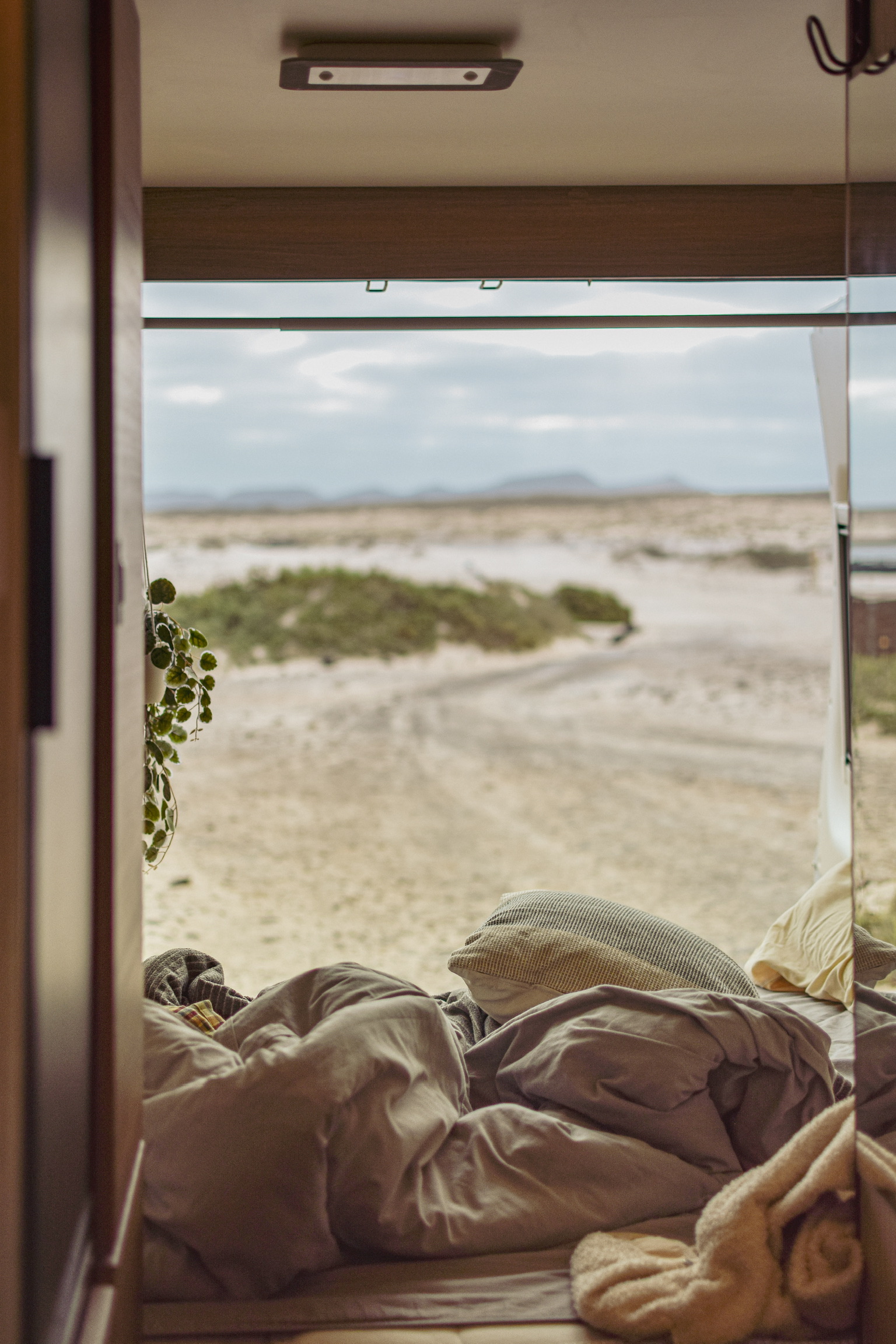
Mid-morning, a proper breakfast with a view. Then it's time to get moving: another beach, a village, a quick shop. The afternoon is for a second surf session or watching the sunset in El Cotillo. In the evening, a relaxed dinner, a surf report for tomorrow, and then off to bed. No suitcases, no check-in, and no rush.
And if something goes wrong, you're not alone. With Vanvaz you get 24/7 roadside assistance in Europe, unlimited mileage, and support via WhatsApp or email. All the information is available on our website. Frequently asked questions.
Frequently asked questions about surfing in Fuerteventura
Is it possible to learn to surf in Fuerteventura?
Yes. The Corralejo area, with Playa del Moro, has many surf schools. Majanicho and El Cotillo have gentler waves for beginners. Ideally, you should start with lessons and then travel around in your campervan depending on the conditions.
Do I need a wetsuit to surf in Fuerteventura?
Yes, almost all year round. Although the water temperature is around 22°C in summer, it's a few degrees cooler than the air in winter. A wetsuit allows you to extend your sessions without getting cold, especially first thing in the morning.
Can I sleep by the beach in my campervan?
Yes, if it's a place where you can park and there are no signs prohibiting it. Sleep inside and don't put anything outside. In protected natural areas and along the coastline, there are more restrictions.
What do I need to rent a Vanvaz?
You must be over 25 years old and have held a category B driving license for at least one year. If you are coming from outside the European Union, you will also need an international driving permit along with the original license.
Your room in the thousand-star hotel is waiting for you
The waves don't give you any warning, but you can be there when they arrive. A surfboard, a wetsuit, and a camper van are all you need to experience Fuerteventura to the rhythm of the sea. Book your Vanvaz campervan And discover why freedom is the luxury of the new era. Fuerteventura awaits you!


 Spanish
 English
 Italian
 German
 French