

7-day campervan route through Fuerteventura
A 7-day campervan route through Fuerteventura It's not about seeing a lot, but about experiencing the island at its own pace: two days in Corralejo and Isla de Lobos, two in the northern villages of Lajares and El Cotillo, one in Betancuria and the interior, one between Ajuy and La Pared, and the final day between the Sotavento lagoon and Morro Jable. And with time for what's important: staying where you feel comfortable.
The essentials in five lines
- Fuerteventura has been a Biosphere Reserve since 2009 and can be crossed from north to south in about two hours.
- To set foot on Isla de Lobos you need a free authorization from the Cabildo, with limited capacity and two four-hour shifts.
- The Sotavento lagoon appears and disappears with the tide: check the table and you'll arrive at its best.
- Sleeping in a camper (overnight stay) is not the same as camping: free camping is not allowed and the areas are in the process of island regulation.
- This route follows the spirit of our 7-day trip: places that are well-lived in.
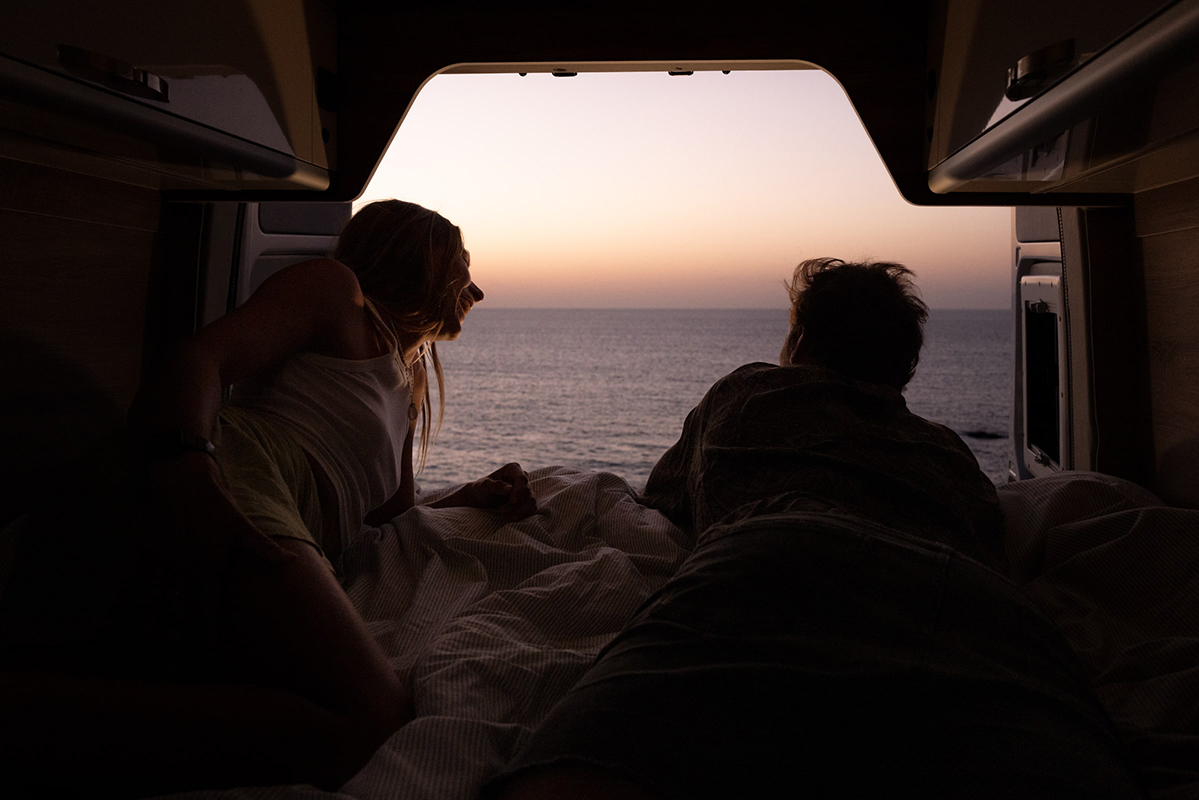
There are islands you visit, and there are islands you experience. Fuerteventura is one of the latter. You don't come here to tick places off a list: you come to spend an entire afternoon on a beach. To meet the fisherman who recommends where to eat. To watch the sun set from the door of your campervan. To sleep under the roof of the thousand-star hotel. Exploring it in a campervan is the way to truly connect with the island. Seven days is enough for that, and little else. And that's how it should be.
Is one week enough to explore Fuerteventura in a campervan?
Yes, and plenty of time. Corralejo and Morro Jable are about 100 kilometers apart. From north to south, it's a two-hour drive. That's why this route doesn't have any long days of "building miles." The longest stretches are around an hour, and on most days you won't even need to start. We begin in the north, travel slowly down through the interior and along the west coast, and finish in the south, returning near the airport. If you have fewer days, check out our website for more options. tours by the day You'll find 3 and 5 day versions.
The day-by-day route
Day 1: Corralejo and the Dunes
The journey begins the moment you pick up your campervan. The first day is for settling in. Instead of taking the motorway, take the road that cuts through the Corralejo Dunes Natural Park. 2,668 hectares of white sand of marine origin, the largest dune field in the Canary Islands. There are parking areas along the road; choose one, go down to the beach, and stay. There's no other plan.
In the afternoon, a stroll along the pier and through the squares of Corralejo to buy anything you might need and find a place for breakfast tomorrow. Your first night listening to the sea from your bed.
Day 2: The Island of Wolves
A whole day for an islet that can be explored on foot in just a few hours. That's how you truly enjoy it. The boat from Corralejo takes 15-20 minutes, but first there's an essential step: Lobos requires a free authorization from the Fuerteventura Island Council, which limits capacity to 200 simultaneous visitors in two shifts (from 10:00 to 14:00 and from 14:00 to 18:00). Each person can request a permit for a maximum of three visitors, up to five days in advance. Applications are processed at the Cabildo platform You need to have it on your phone or printed out, because they validate it when you disembark. Some cruise lines handle it when you buy your ticket; check if yours includes it.
In Lobos, walk to the lighthouse, swim at La Concha beach, and sit and admire Fuerteventura from the other side. On your way back, the campervan will be waiting for you in Corralejo for a second night without having to lift a finger.
Day 3: Lajares
Today it's just a 20-minute drive, and it's the last one until the day after tomorrow. Following the road up towards La Oliva and Lajares, you'll arrive mid-morning at the village that best embodies the northern lifestyle: enjoying breakfast without a watch, admiring surfboards, and chatting with whoever sits next to you. Lajares is the kind of place where people come for a week and end up staying for a year.
Spend the afternoon relaxing, and if you feel like a walk, the trail to the Calderón Hondo volcano starts from the village, offering views of the north of the island and Lanzarote. Have dinner in the village and enjoy a peaceful night.
Day 4: El Cotillo
Just ten minutes from Lajares is El Cotillo, and you'll want to stay there. The lagoons north of the village are natural pools of crystal-clear water where you can easily spend an entire day. Nearby, the Tostón Lighthouse watches over a wild coastline that deserves a leisurely stroll.
In the afternoon, the ritual: sitting on the beach, or in the doorway of the campervan, and watching the sun sink into the sea. It's one of the island's best sunsets, and it's even better viewed from a campervan.
Day 5: Betancuria and the interior
Today there is indeed a trip, and it's a beautiful one. Heading south, you'll pass through La Oliva, the historic capital of the north, and towards Tefía you'll see Tindaya mountain on your right, the sacred mountain of Fuerteventura. From there, the road winds towards Betancuria.
Founded in 1404 by Jean de Béthencourt and Gadifer de la Salle, it was the island's first capital and was tucked inland, away from pirates. Its cobbled streets and the Church of Santa María are worth a leisurely stroll, and the viewpoints along the FV-30 road towards Vega de Río Palmas offer a different perspective of Fuerteventura, especially at sunset. The day ends in Pájara, a good place to restock supplies and rest.
Day 6: Ajuy and La Pared
Ajuy is a journey through time, literally. Its caves form a Natural Monument Spanning approximately 32 hectares within the Betancuria Rural Park, its coastal path reveals the oldest geological materials in the Canary Islands, dating back over 100 million years, predating the island's formation. The walk from the black sand beach to the caves passes by old lime kilns and a viewpoint overlooking the sea. Enjoy fresh fish in the village and linger.
In the afternoon, it's a half-hour drive to La Pared, on the west coast, another popular spot to watch the sunset. The sea here is rough: check the tides before swimming.
Day 7: Leeward and Morro Jable
The last day begins at the lagoon of Leeward, The world mecca of windsurfing and kitesurfing, where a round of the world championship is held every year. A sandbar separates a shallow sheet of water that emerges with the tide; check the board to see it at its best and walk along it. It's one of those beaches where the morning slips away without you noticing.
Next, follow the FV-2 to the end of the paved road: Morro Jable. This old fishing village preserves its harbor and historic center, and Matorral beach, with its lighthouse and protected salt marsh, offers miles of sand for a final long swim. Enjoy fresh fish by the sea and forget about time.
On the way back to the airport, if you have an hour to spare, the Salinas del Carmen They're the perfect stop: the only working salt flats on the island, a Site of Cultural Interest since 2002, with a Salt Museum open every day. And afterwards, the most relaxing way to unwind after a week of adventure.
Where to sleep with a campervan in Fuerteventura?
There are no traditional campsites in Fuerteventura, and that's why it's important to understand the difference between overnight stay y camp. Overnight stays mean sleeping inside a properly parked vehicle, without extending awnings, tables, or chairs, and without spilling liquids. Camping encompasses everything else, and wild camping is not permitted outside of areas and periods designated by local councils.
The Fuerteventura Island Council is processing an island-wide ordinance that establishes the criteria for camping, campsites, and areas reserved for caravans, motorhomes, and campervans, and the six municipalities will be responsible for specifying the zones. As this is subject to change, it is best to consult the updated information in the Cabildo website and at the town halls, and ask your Vanstyle advisor Before choosing where to spend each night. In protected natural areas, such as the Corralejo Dunes or the Morro Jable salt marsh, always respect the signage.
Tips for your campervan route through Fuerteventura
- The wind owns the island. Park facing the camper to shelter yourself and don't leave anything loose outside.
- Water and shade. Fuerteventura is arid; fill up your tank when you can and always carry water for walks in Ajuy, Lobos or Calderón Hondo.
- Tides and currents. The sea is rough on the west coast. Check the tides before swimming. We'll tell you all about it in detail in Exploring the sea tides in Fuerteventura.
- Leave the place better than you found it. The entire island is Biosphere Reserve. Our guide to be a sustainable traveler It has the essentials.
- Book Lobos in advance. Shifts fill up fast on weekends and during the summer.
Frequently Asked Questions
How many days does it take to travel around Fuerteventura in a campervan?
With 7 days you can explore the entire island at its own pace: one or two places per day and time to linger wherever you feel comfortable. With 3 days you can experience the north; with 5, the center and the south. On the website of Vanvaz tours You have the three proposals.
Is it possible to sleep in a campervan on any beach in Fuerteventura?
Not just anywhere. You can spend the night in your vehicle where parking is permitted and unrestricted, without setting up awnings or furniture. Wild camping is not allowed, and these areas are currently being regulated by the Island Council and local councils, so check the updated information before each night.
Do you need a permit to visit Isla de Lobos?
Yes. The Fuerteventura Island Council requires a free permit, with a capacity of 200 people per shift (10:00-14:00 and 14:00-18:00), a maximum of three visitors per request, and must be requested up to five days in advance. The permit is requested online and shown upon arrival.
How many kilometers are covered on this route?
Very few for a week: just over 250 kilometers in total, including the return trip to the airport, spread over journeys that rarely exceed an hour. The route is designed for minimal driving and plenty of time spent at the airport. All journeys are on paved roads.
What is the best time to do the route?
Fuerteventura enjoys good weather year-round. Spring and autumn offer mild temperatures and fewer crowds. Summer is the windy season, with windsurfing and kitesurfing competitions in Sotavento.
What does a Vanvaz camper van for this route include?
It depends on the model (Maxi Camper, Trail Van, or Desert Van) and the price, but generally, they include a kitchen and utensils, basic camping equipment, and unlimited mileage. You'll also receive explanatory videos about your van, support via WhatsApp or email from your VanVaz advisor, and 24/7 roadside assistance. You can find all the details in our [link to VanVaz website/website/etc.]. Frequently asked questions.
Your room in the thousand-star hotel is waiting for you
Seven days, seven sunsets, and an island that, as people say, changes you and leaves you anything but indifferent. The route is already mapped out; all that's left is for you to decide when the adventure begins. Book your Vanvaz campervan And discover why freedom is the luxury of the new era. Fuerteventura awaits you!